Quiet Partition Journal · Last updated May 23, 2026
Fabric, Felt, Foam, and Wood: Divider Materials Explained
A practical support note for planning portable acoustic partitions.
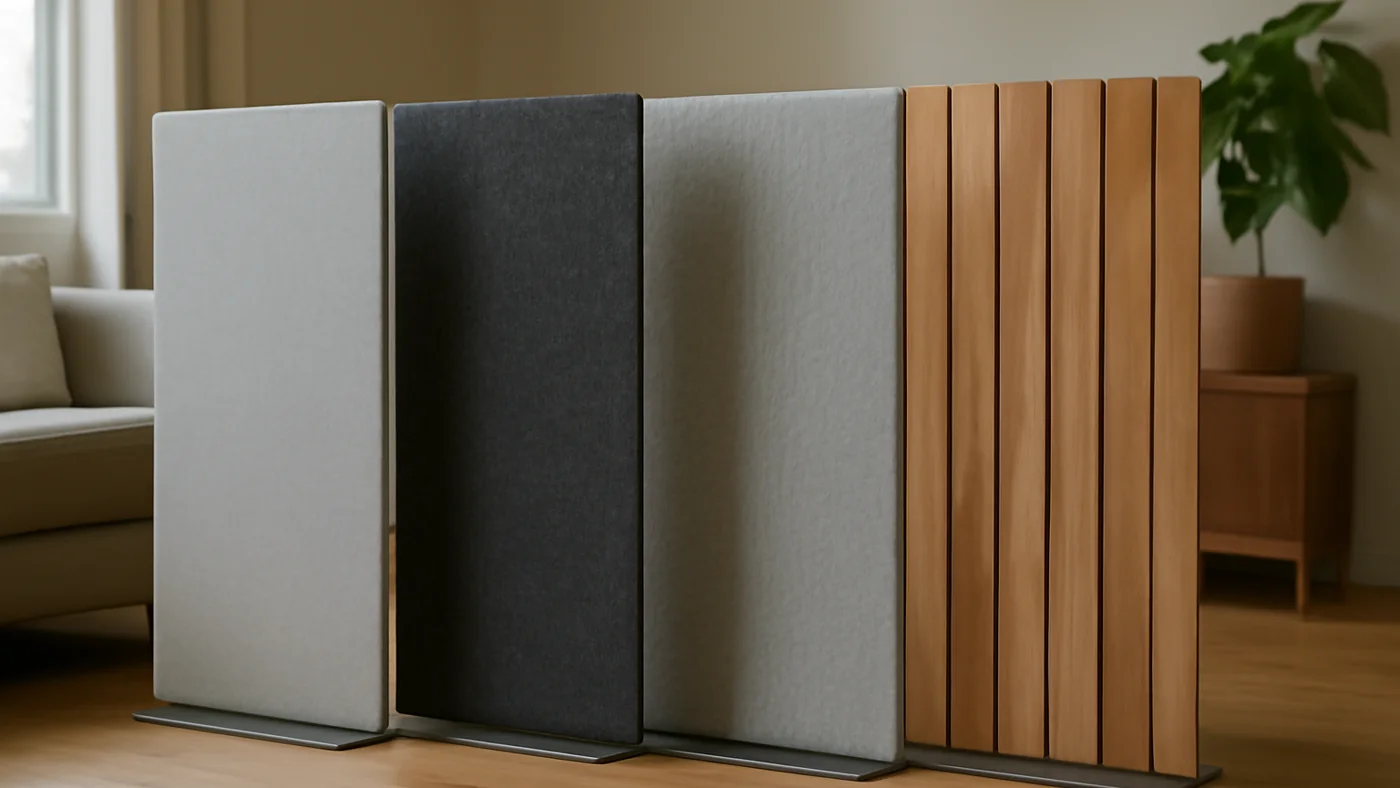
I like to start with the room as it actually behaves: doors open, floors hard, voices traveling around corners, and a desk or bed that cannot always move. That keeps divider advice practical rather than magical.
Start with the noise path
A useful fabric, felt, foam, and wood: divider materials explained plan begins by asking where the sound travels, not just where the divider looks best. Voices bounce through open paths, hard floors, glass, and bare walls.
With soundproof room dividers, the honest goal is usually sound reduction and privacy, not total silence. I look at placement, surface coverage, gaps, material weight, and how the divider behaves in a real room with doors, floors, windows, and people moving around.
Choose coverage over decoration
A taller, wider divider with fewer gaps usually helps more than a pretty narrow screen. Soft surfaces and mass matter when you want a calmer work or sleep corner.
With soundproof room dividers, the honest goal is usually sound reduction and privacy, not total silence. I look at placement, surface coverage, gaps, material weight, and how the divider behaves in a real room with doors, floors, windows, and people moving around.
Keep the room usable
The divider should not create a maze. Leave walking paths, light, airflow, and access to outlets in mind so the quieter corner still works every day.
With soundproof room dividers, the honest goal is usually sound reduction and privacy, not total silence. I look at placement, surface coverage, gaps, material weight, and how the divider behaves in a real room with doors, floors, windows, and people moving around.
Treat expectations carefully
Portable partitions can soften voices and visual distractions, but they are not construction-grade walls. That honest expectation prevents disappointment.
With soundproof room dividers, the honest goal is usually sound reduction and privacy, not total silence. I look at placement, surface coverage, gaps, material weight, and how the divider behaves in a real room with doors, floors, windows, and people moving around.
Checklist
- Map the sound path.
- Measure the opening.
- Reduce side gaps.
- Keep the room usable.
- Combine with soft furnishings where sensible.
Quick FAQs
What matters most?
Coverage, material, placement, and fewer gaps usually matter most.
Can renters use this?
Yes, portable dividers are often rental-friendly because they avoid drilling and permanent changes.
Should I choose the tallest panel?
Taller helps only if it remains stable and fits the room safely.
Can it work with other soft furnishings?
Yes, rugs, curtains, and soft furniture can support the divider by reducing reflections.
Return to the main soundproof room divider guide.
Where to Place Soundproof Room Dividers for Better Quiet
Room Divider Ideas for Noisy Home Offices
Using Dividers in Shared Bedrooms Without Making the Room Feel Smaller
Rental-Friendly Ways to Soften Noise with Portable Partitions
Soundproof Room Divider Mistakes That Waste Money
Related guide: Desk lamp setup notes for calmer workspaces.