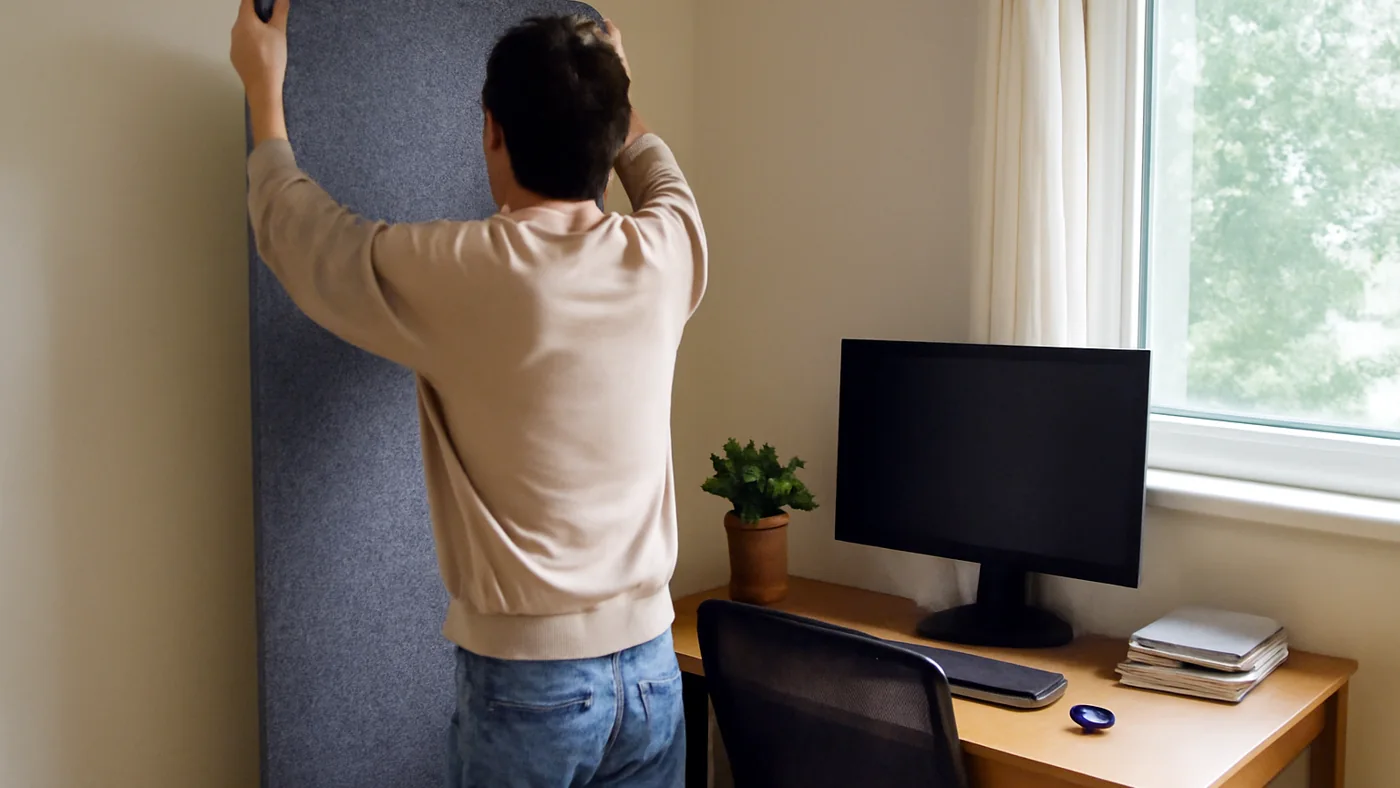
If you are comparing the best soundproof room dividers, I would first separate two promises: real acoustic improvement and complete sound blocking. Portable dividers can make a space calmer, but the best results come from size, placement, soft surfaces, and realistic expectations.
This guide supports the LeStallion product roundup by focusing on the room-planning side: where to place panels, what materials tend to help, and when a divider is the right answer versus a rug, curtains, door seal, or more permanent treatment.
Start with the noise path
A useful soundproof room divider plan begins by asking where the sound travels, not just where the divider looks best. Voices bounce through open paths, hard floors, glass, and bare walls.
With soundproof room dividers, the honest goal is usually sound reduction and privacy, not total silence. I look at placement, surface coverage, gaps, material weight, and how the divider behaves in a real room with doors, floors, windows, and people moving around.
Choose coverage over decoration
A taller, wider divider with fewer gaps usually helps more than a pretty narrow screen. Soft surfaces and mass matter when you want a calmer work or sleep corner.
With soundproof room dividers, the honest goal is usually sound reduction and privacy, not total silence. I look at placement, surface coverage, gaps, material weight, and how the divider behaves in a real room with doors, floors, windows, and people moving around.
Keep the room usable
The divider should not create a maze. Leave walking paths, light, airflow, and access to outlets in mind so the quieter corner still works every day.
With soundproof room dividers, the honest goal is usually sound reduction and privacy, not total silence. I look at placement, surface coverage, gaps, material weight, and how the divider behaves in a real room with doors, floors, windows, and people moving around.
Treat expectations carefully
Portable partitions can soften voices and visual distractions, but they are not construction-grade walls. That honest expectation prevents disappointment.
With soundproof room dividers, the honest goal is usually sound reduction and privacy, not total silence. I look at placement, surface coverage, gaps, material weight, and how the divider behaves in a real room with doors, floors, windows, and people moving around.
Simple buying checklist
- Measure the height and width of the noisy opening.
- Look for soft, dense, or layered materials.
- Check feet, hinges, and stability before buying tall panels.
- Plan storage if the divider is only used during calls or sleep.
- Use the LeStallion soundproof room divider recommendations with your actual room layout beside you.
Where to Place Soundproof Room Dividers for Better Quiet
A practical companion note for divider setup.
Read this noteFabric, Felt, Foam, and Wood: Divider Materials Explained
A practical companion note for divider setup.
Read this noteRoom Divider Ideas for Noisy Home Offices
A practical companion note for divider setup.
Read this noteUsing Dividers in Shared Bedrooms Without Making the Room Feel Smaller
A practical companion note for divider setup.
Read this noteRental-Friendly Ways to Soften Noise with Portable Partitions
A practical companion note for divider setup.
Read this noteSoundproof Room Divider Mistakes That Waste Money
A practical companion note for divider setup.
Read this noteSoundproof room divider FAQs
Will a divider make a room silent?
No. It can reduce distraction and reflections, but it will not replace construction-grade isolation.
Are fabric dividers better?
Fabric and felt surfaces often absorb more reflection than hard decorative screens, especially for voices.
Where should I place one?
Place it between the sound source and the quiet area, while minimizing gaps around the sides and bottom.
Do dividers help video calls?
They can help by softening nearby room reflections and adding visual privacy behind a desk.
Related guide: Desk lamp setup notes for calmer workspaces.